


Common Website Mistakes That Hurt Your Google Rankings
March 28, 2026
website
Introduction

Google rankings are a crucial factor for any business looking to grow its online presence, yet many websites fail to perform well despite the time and effort invested in building them. One of the primary reasons behind this struggle is the presence of common website mistakes that negatively impact search engine optimization (SEO).

Search engines like Google analyze websites based on multiple factors, including content quality, website performance, mobile responsiveness, and technical structure. When a website does not meet these standards, it becomes difficult to rank higher in search results.

By identifying and fixing these common website mistakes, businesses can significantly improve their Google rankings, enhance visibility, and attract more organic traffic to their website.

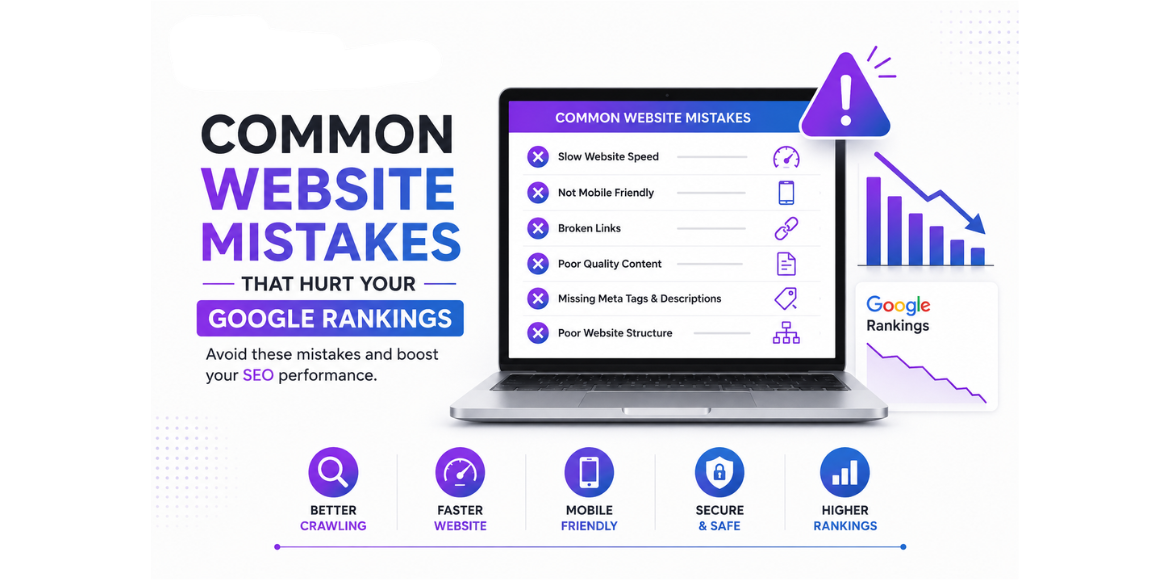
Slow Website Loading Speed

Website speed is one of the most important ranking factors. When a website loads slowly, users are more likely to leave before exploring the content.

Search engines prioritize fast websites because they provide a better user experience. Large images, poor hosting, and excessive scripts are common causes of slow loading speed.

Improving website performance by optimising images, reducing unnecessary code, and using reliable hosting can help improve user experience and search rankings.

Lack of Mobile-Friendly Design

With most users accessing the internet through mobile devices, having a mobile-friendly website is essential. Google uses mobile-first indexing, meaning it primarily evaluates the mobile version of a website when determining rankings.

If a website does not display properly on smartphones or tablets, it can negatively affect search performance and user engagement.

Responsive website design ensures that your website adapts to different screen sizes and provides a seamless browsing experience.

Poor Quality or Duplicate Content

Content plays a major role in SEO. Websites that publish low-quality, thin, or duplicate content often struggle to rank well in search results.

Search engines prefer unique, informative, and valuable content that answers user queries effectively.

Regularly publishing well-researched and engaging content helps improve website authority and increases the chances of ranking higher in search engines.

Missing or Improper Use of Keywords

Keywords help search engines understand the topic of a webpage. If a website does not include relevant keywords or uses them incorrectly, it becomes difficult for search engines to rank the page for relevant searches.

However, excessive keyword usage (keyword stuffing) can also harm SEO performance.

The best approach is to use keywords naturally within headings, paragraphs, and meta tags while focusing on providing valuable information to readers.

Broken Links and Technical Errors

Broken links and technical errors can negatively impact both user experience and SEO performance. When users click on a link that leads to an error page, it creates frustration and reduces trust in the website.

Search engines also consider website health when ranking pages. Regular website audits can help identify broken links, missing pages, and technical issues that need to be fixed.

Maintaining a well-structured and error-free website improves overall performance and search visibility.

Poor Website Structure and Navigation

A confusing website structure makes it difficult for both users and search engines to navigate the site.

Clear navigation menus, well-organized pages, and proper internal linking help search engines understand the relationship between different pages on the website.

A well-structured website improves user experience and helps search engines crawl and index pages more efficiently.

Lack of Meta Titles and Meta Descriptions

Meta titles and meta descriptions play a crucial role in SEO. These elements help search engines understand the content of a page and influence how it appears in search results.

If a website does not include optimized meta tags, it may miss opportunities to attract clicks from users searching for relevant information.

Creating clear and keyword-optimized meta titles and descriptions can improve both search visibility and click-through rates.

Conclusion

Avoiding common website mistakes is essential for improving search engine rankings and creating a better user experience. Factors such as website speed, mobile responsiveness, high-quality content, and proper SEO optimization play a significant role in determining search visibility.

By regularly auditing your website and addressing technical and content-related issues, businesses can improve their SEO performance and attract more organic traffic.

Investing in proper website optimization ensures that your website remains competitive and continues to perform well in search engine results.

Leave A Comment

Create your account