


Why Website Speed Matters for SEO and User Experience
Introduction
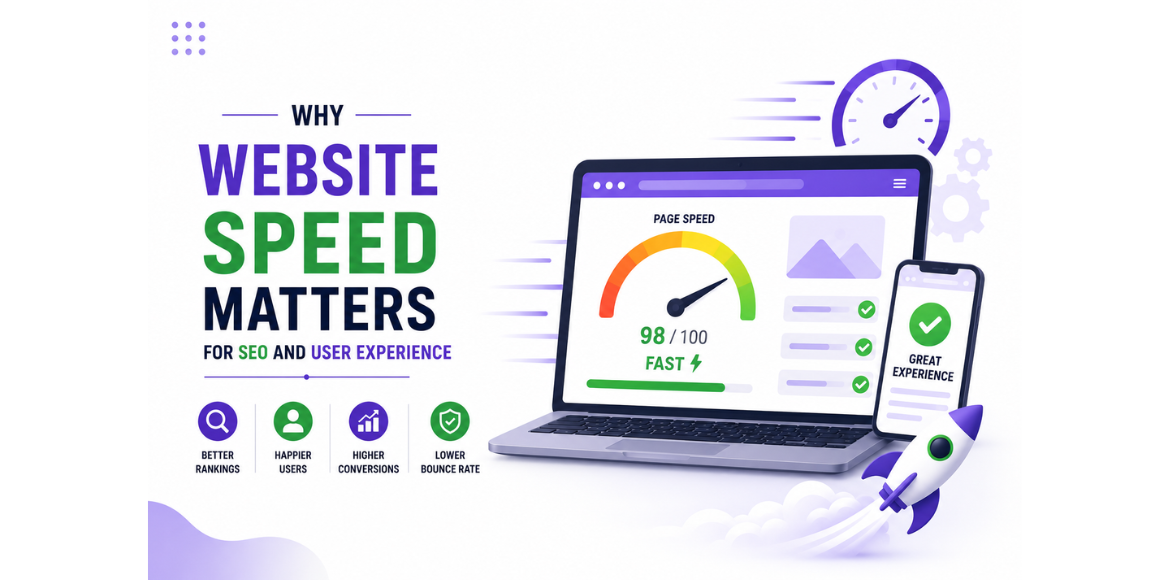
Website speed is an important factor that directly affects SEO and user experience in today’s digital world. With increasing competition online, even a few seconds of delay can impact how users interact with your website. If a website loads slowly, visitors are more likely to leave and choose a competitor instead.
Website speed is no longer just a technical factor — it plays a crucial role in both search engine optimization (SEO) and user experience. A fast website not only helps you rank higher on search engines but also keeps users engaged and improves overall business performance.
Website Speed as a Google Ranking Factor
Search engines like Google prioritize websites that provide a better user experience. One of the key factors that influence this is website speed.
Google uses page speed as part of its ranking algorithm. Websites that load faster are more likely to rank higher in search results compared to slower websites. This is because search engines aim to deliver the best possible experience to users.
A fast-loading website helps:
- Improve search engine rankings
- Increase organic traffic
- Enhance crawl efficiency
On the other hand, slow websites may struggle to rank well, even if the content is good.
Impact of Website Speed on User Experience
User experience is directly linked to how fast your website loads. When users visit a website, they expect instant access to information.
If your website takes too long to load:
- Users may leave without interacting
- Bounce rates increase
- Engagement decreases
A fast website ensures:
- Smooth navigation
- Better readability
- Higher user satisfaction
When users have a positive experience, they are more likely to stay longer, explore more pages, and return in the future.
Website Speed and Bounce Rate
Bounce rate refers to the percentage of users who leave a website without taking any action.
Slow websites often have high bounce rates because users lose patience. Even a delay of 2–3 seconds can significantly increase the chances of users leaving the page.
Lower bounce rates signal to search engines that your website is valuable and relevant, which can improve your rankings.
Faster Websites Improve Conversion Rates
Website speed has a direct impact on business results. Whether your goal is to generate leads, sell products, or get inquiries, speed plays a key role.
A fast website:
- Encourages users to complete actions
- Improves trust and credibility
- Increases conversion rates
A slow website can lead to:
- Lost customers
- Abandoned carts
- Reduced sales
Businesses that invest in speed optimization often see better performance and higher revenue.
Mobile Experience and Speed
With the majority of users accessing websites through mobile devices, speed optimization has become even more important.
Mobile users expect fast-loading pages, even on slower internet connections. Google also uses mobile-first indexing, meaning it primarily evaluates the mobile version of your website.
A fast mobile website:
- Improves user experience
- Increases engagement
- Helps in better ranking
Optimizing your website for mobile speed is essential for reaching a wider audience.
Common Factors That Affect Website Speed
Several factors can slow down a website:
- Large, unoptimized images
- Too many plugins or scripts
- Poor hosting services
- Unoptimized CSS and JavaScript
- Lack of caching
Identifying these issues is the first step toward improving performance.
Effective Ways to Improve Website Speed
Improving website speed requires both technical and strategic changes.
Some effective methods include:
- Compressing and optimizing images
- Using fast and reliable hosting
- Minimizing unnecessary code
- Enabling browser caching
- Using a Content Delivery Network (CDN)
- Reducing redirects
Regular performance testing using tools like page speed analyzers can help track improvements.
Website Speed Builds Trust and Credibility
A fast website creates a strong first impression. When users experience quick loading and smooth navigation, they perceive the brand as professional and reliable.
Slow websites, on the other hand, can create frustration and reduce trust.
A well-performing website encourages users to:
- Stay longer
- Explore services
- Take action
Website performance is a key ranking factor, as explained in Google’s official guidelines.
Conclusion
Website speed is a critical factor that affects SEO, user experience, and overall business performance. A fast-loading website improves search rankings, reduces bounce rates, increases conversions, and builds customer trust.
In today’s competitive digital landscape, businesses cannot afford to ignore website performance. By optimizing website speed and continuously improving performance, businesses can create a better user experience and achieve long-term success.