

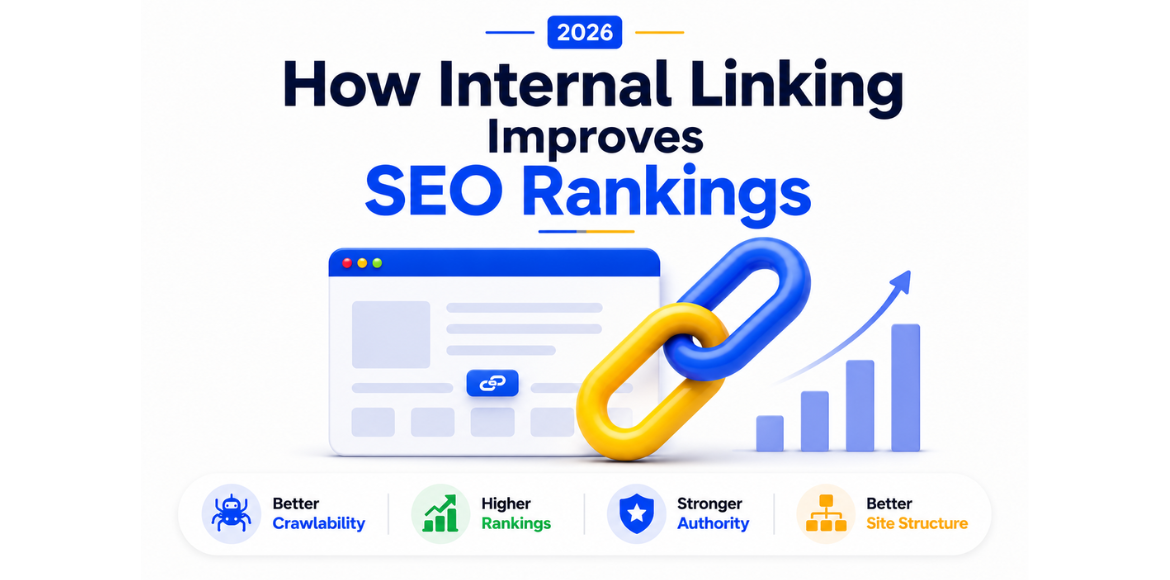
How Internal Linking Improves SEO Rankings
Introduction
Internal linking is one of the most powerful yet overlooked SEO strategies for improving website rankings, user experience, and search engine crawlability. A strong internal linking structure helps search engines understand your website hierarchy while guiding visitors to relevant pages and valuable information.
Whether you run a business website, an eCommerce store, a blog, or a service platform, internal links play a major role in improving organic visibility and increasing engagement.
In this guide, we’ll explain how internal linking improves SEO rankings, best practices for internal linking, common mistakes to avoid, and strategies businesses can use to strengthen website authority.
What Is Internal Linking?
Internal linking refers to linking one page of your website to another page on the same domain. These links help users navigate through your website while helping search engines discover and understand your content.
For example:
- Linking a blog about SEO strategies to a related article about technical seo.
- Linking service pages to relevant case studies.
- Connecting landing pages to related business solutions.
Internal links create relationships between pages and help distribute authority across your website.
Why Internal Linking Is Important for SEO
Internal links help search engines:
- Crawl pages more efficiently
- Understand website structure
- Identify important pages
- Pass authority between pages
- Improve indexing speed
- Enhance user experience
Without proper internal linking, important pages may remain difficult for search engines to discover.
Google itself recommends creating a logical internal linking structure to help both users and crawlers navigate websites efficiently.
How Internal Linking Improves SEO Rankings
1. Improves Website Crawlability
Search engine bots use links to discover pages across a website. Strong internal linking ensures search engines can easily crawl important pages.
If pages are isolated without internal links, they may not get indexed properly.
Related Blog Opportunity:
2. Helps Search Engines Understand Content Relationships
Internal links help Google understand how pages relate to each other.
For example, if multiple blogs link to a page about SEO services, Google may recognize that page as an important authority page.
This strengthens topical relevance and improves ranking opportunities.
Related Internal Links:
3. Distributes Page Authority Across Your Website
Pages with strong backlinks can pass authority to other pages through internal links.
This process helps improve rankings for pages that may not yet have external backlinks.
Strategic internal linking allows websites to strengthen:
- Service pages
- Product pages
- Landing pages
- Blog content
4. Increases User Engagement
Internal links encourage users to explore more pages, increasing:
- Session duration
- Page views
- User engagement
- Conversion opportunities
When visitors find relevant content easily, bounce rates may decrease and user experience improves.
5. Helps Important Pages Rank Faster
Pages linked frequently from high-authority pages often receive better crawl frequency and visibility.
For example:
- Homepage links
- Navigation menu links
- Blog contextual links
- Footer links
These help search engines prioritize important pages.
Best Internal Linking Strategies
Use Descriptive Anchor Text
Anchor text should clearly explain the linked page.
Good Example:
Poor Example:
- “Click here”
Descriptive anchor text improves user understanding and SEO relevance.
Link Related Content Naturally
Only add internal links where they are contextually relevant.
For example:
- SEO blogs linking to technical SEO content
- CRO blogs linking to landing page optimization
- Digital marketing blogs linking to Google Ads guides
This improves content relationships.
Prioritize Important Pages
Link more frequently to:
- Service pages
- High-converting landing pages
- Pillar content
- Important blogs
This helps distribute authority effectively.
Use a Logical Website Structure
A clear structure improves both user experience and crawlability.
Example Structure:
Home → Services → SEO Services → SEO Blogs
Related Blog Opportunity:
- Best Website Structure for SEO in 2026
Regularly Audit Internal Links
Broken or outdated links can negatively affect user experience.
Use tools like:
Common Internal Linking Mistakes
1. Overusing Exact Match Anchor Text
Using the same keyword repeatedly may appear manipulative.
2. Adding Too Many Links
Excessive internal links can reduce content clarity and dilute value.
3. Linking Irrelevant Pages
Links should provide value and context.
4. Ignoring Orphan Pages
Pages without internal links are harder for search engines to discover.
5. Using Generic Anchor Text
Avoid vague anchors like:
- Read more
- Click here
- Learn more
Use descriptive and keyword-relevant anchors instead.
Internal Linking vs External Linking
Internal Linking | External Linking |
Connects pages within the same website | Connects to another website |
Helps website structure | Builds content credibility |
Improves crawlability | Provides external references |
Passes authority internally | Associates content with trusted sources |
Both are important for SEO when used strategically.
Internal Linking Best Practices for Business Websites
Businesses should:
- Link blogs to service pages
- Connect related service pages
- Add links to case studies
- Use breadcrumb navigation
- Create topic clusters
- Link old blogs to new content
- Update internal links regularly
This improves overall website authority and content discoverability.
Conclusion
Internal linking is a powerful SEO strategy that improves website structure, user experience, crawlability, and keyword rankings.
A strong internal linking strategy helps search engines understand your content while guiding users toward relevant pages and conversion opportunities.
Businesses that invest in proper internal linking often experience improved indexing, better engagement, and stronger organic visibility over time.
If you want to improve your website’s SEO performance, internal linking should be a core part of your digital marketing strategy.
Ready to Improve Your Website SEO?
A strong internal linking strategy can improve crawlability, boost rankings, and help search engines understand your website structure more effectively.
At Adikarah Tech, we help businesses build SEO-friendly websites with smart content structures, technical SEO optimization, and performance-focused digital strategies.
Our Services:
- SEO Optimization
- Technical SEO Audits
- Website Development
- Landing Page Optimization
- Digital Marketing Solutions
- Website Performance Improvements
Want to Improve Your Website Rankings?
Get in touch with our team and build a stronger SEO foundation for your business.
👉 Explore Our Services:
Adikarah Tech Services
FAQS
1. Does internal linking improve SEO?

2. How many internal links should a page have?

3. What is the difference between internal and external linking?

4. What is anchor text in SEO?

5. Can too many internal links hurt SEO?