


Omnichannel vs Multichannel Marketing: Key Differences & Strategy (2026 Guide)
Introduction
Omnichannel vs multichannel marketing is one of the most important decisions businesses face today. In a digital world where customers interact with brands across websites, social media, email, and multiple platforms, choosing the right approach can directly impact your growth, engagement, and customer experience.
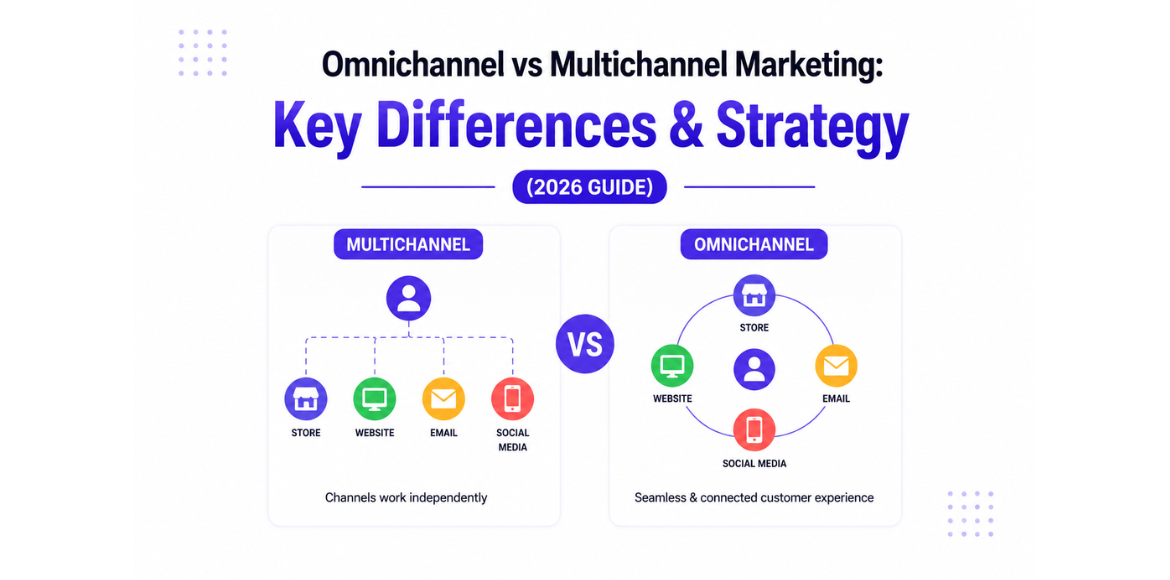
While both strategies involve using multiple channels, they differ in how those channels work together. Multichannel marketing focuses on being present across platforms, whereas omnichannel marketing connects those platforms to create a seamless customer journey.
Understanding the difference between omnichannel and multichannel marketing helps businesses improve engagement, build stronger relationships, and increase conversions.
In this guide, you’ll learn the key differences, real examples, and how to choose the right strategy for your business in 2026.
What is Multichannel Marketing?
Multichannel marketing refers to using multiple platforms to reach your audience.
Example:
Each channel works independently.
The goal is to be present on multiple platforms.
What is Omnichannel Marketing?
Omnichannel marketing focuses on creating a connected and seamless experience across all channels.
Example:
- A customer sees your Instagram ad
- Visits your website
- Gets a personalized email follow-up
All channels are integrated and work together
Omnichannel vs Multichannel Marketing (Key Differences)
Feature | Multichannel Marketing | Omnichannel Marketing |
Approach | Multiple channels | Integrated channels |
Customer Experience | Separate | Seamless |
Data Usage | Limited | Unified |
Focus | Channel presence | Customer journey |
In simple terms:
- Multichannel = Presence
- Omnichannel = Experience
Examples of Each Strategy
Multichannel Example:
A business posts:
- Instagram content
- Email campaigns
- Website blogs
But these are not connected.
Omnichannel Example:
A user:
- Clicks an ad
- Visits website
- Gets retargeting ads
- Receives personalized email
Smooth, connected journey.
Which Strategy is Better for Businesses?
It depends on your business stage:
Small Businesses:
Start with multichannel marketing
- Easier to manage
- Lower cost
Growing Businesses:
Move to omnichannel marketing
- Better customer experience
- Higher conversions
How to Create a Multi-Channel Marketing Strategy
Follow these steps:
1. Identify your target audience
2. Choose the right platforms (Instagram, Google, etc.)
3. Create consistent content
4. Track performance
5. Optimize regularly
How to Transition to Omnichannel Strategy
To move from multichannel to omnichannel:
- Integrate your data
- Use CRM tools
- Personalize user experience
- Align all marketing channels
Why This Matters for Your Business
Businesses that implement the right strategy:
✔ Improve customer experience
✔ Increase engagement
✔ Boost conversions
✔ Build long-term brand trust
How Adikarah Tech Can Help
Choosing the right strategy is just the first step.
Implementing it correctly is where most businesses struggle.
At Adikarah Tech, we help businesses:
- Build effective multi-channel marketing strategies
- Create seamless omnichannel experiences
- Improve SEO, social media, and paid marketing performance
- Drive real business growth with data-driven strategies
Whether you’re starting or scaling, we help you choose and implement the right approach.
Ready to Grow Your Business?
Looking to implement a powerful marketing strategy for your business?
Get in touch with Adikarah Tech today, and let’s build a strategy that drives results.
Conclusion
Understanding the difference between omnichannel and multichannel marketing is essential for modern businesses.
- Multichannel helps you reach customers
- Omnichannel helps you connect with them
The real growth happens when you use the right strategy at the right time.
FAQS
1. What is the difference between omnichannel and multichannel marketing?

2. Which is better: omnichannel or multichannel marketing?

3. Can small businesses use omnichannel marketing?

4. What are examples of multichannel marketing?

5. What are examples of omnichannel marketing?