
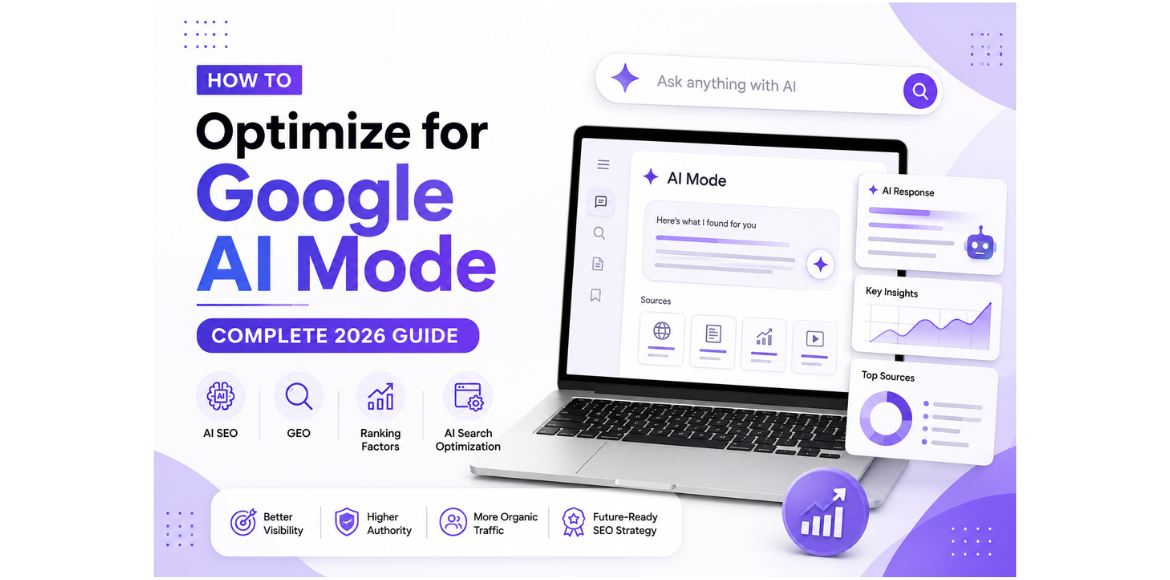
How to Optimize for Google AI Mode: Complete 2026 Guide
Introduction
Google Search has evolved significantly with the introduction of AI Mode, transforming how users discover information online. Instead of displaying only a list of blue links, Google now provides AI-generated answers that summarize information from multiple trusted sources. This means businesses, marketers, and content creators must rethink their SEO strategies to ensure their content is selected as a trusted source for AI-generated responses.
In this guide, you’ll learn what Google AI Mode is, why it matters, and the best practices to optimize your website for AI-powered search results in 2026.
What is Google AI Mode?
Google AI Mode is an advanced search experience powered by Google’s Gemini AI models. It analyzes user intent, gathers information from authoritative sources, and generates conversational answers while still providing links to supporting websites.
Unlike traditional search results that rely mainly on keyword rankings, AI Mode focuses on:
- Content quality
- Topical authority
- Trustworthiness
- User intent
- Structured information
- Helpful answers
The goal is to provide users with faster, more accurate responses without requiring multiple searches.
Why Google AI Mode Matters
AI-generated search is changing user behavior.
Instead of clicking multiple websites, users often receive comprehensive answers directly within Google.
Benefits for websites optimized for AI Mode include:
- Higher visibility in AI-generated responses
- Increased brand authority
- Better organic traffic quality
- More qualified leads
- Improved user trust
How Google AI Mode Selects Content
Google AI doesn’t simply rank pages by keywords.
It evaluates several signals including:
Content Relevance
The page must directly answer the user’s query.
Topical Authority
Websites covering a topic in-depth perform better than sites with isolated articles.
EEAT Signals
Google evaluates:
- Experience
- Expertise
- Authoritativeness
- Trustworthiness
Fresh Information
Updated content is more likely to be referenced.
Structured Data
Schema markup helps Google understand page content.
15 Best Practices to Optimize for Google AI Mode
1. Focus on Search Intent
Understand why users are searching.
Instead of targeting only keywords, answer questions such as:
- How
- Why
- What
- When
- Which
Create content that completely satisfies the searcher’s intent.
2. Write Comprehensive Content
AI prefers detailed resources over thin articles.
Include:
- Definitions
- Step-by-step guides
- Examples
- FAQs
- Statistics
- Expert insights
Aim to become the most complete resource on the topic.
3. Use Clear Heading Structure
Organize content with:
- H1
- H2
- H3
- Bullet points
- Numbered lists
- Tables
Well-structured content is easier for AI systems to understand.
4. Add FAQ Sections
FAQs increase the chances of your content being used in AI-generated summaries.
Example:
What is Google AI Mode?
Google AI Mode is an AI-powered search experience that generates conversational answers using trusted web sources.
5. Build Topical Authority
Instead of publishing random blogs, create topic clusters.
Example:
Main Topic:
Digital Marketing
Supporting Articles:
Internal linking strengthens authority.
6. Improve EEAT Signals
Include:
- Author bios
- Company information
- Contact page
- References
- Original research
- Customer testimonials
Google values trustworthy sources.
7. Use Schema Markup
Implement structured data including:
- Article Schema
- FAQ Schema
- Organization Schema
- Breadcrumb Schema
- Author Schema
Schema improves Google’s understanding of your content.
8. Optimize for Conversational Queries
People now search like they talk.
Example:
Instead of:
Optimize for:
What are the best SEO tips for Google AI Mode?
Natural language performs better in AI search.
9. Create Original Insights
Avoid copying existing content.
Publish:
- Case studies
- Survey results
- Personal experiences
- Industry reports
- Expert opinions
Unique content increases authority.
10. Update Existing Content
Refresh blogs regularly.
Update:
- Statistics
- Screenshots
- Examples
- Trends
- FAQs
Fresh content is more likely to appear in AI-generated answers.
11. Improve Page Experience
Technical SEO still matters.
Optimize:
- Core Web Vitals
- Mobile usability
- Fast loading speed
- HTTPS
- Easy navigation
A better user experience supports higher visibility.
12. Strengthen Internal Linking
Connect related pages using descriptive anchor text.
Example:
This helps Google understand relationships between topics.
13. Build High-Quality Backlinks
Earn links through:
- Guest blogging
- Industry partnerships
- Original research
- Digital PR
- Resource pages
Quality backlinks improve credibility.
14. Answer Multiple Related Questions
Cover secondary questions within the same article.
For example, a guide on Google AI Mode could also answer:
- How does AI search work?
- Is AI Mode replacing SEO?
- What is Generative Search?
- How do AI Overviews differ?
This increases topical depth.
15. Monitor Performance
Use tools like:
Track:
- Organic traffic
- CTR
- Rankings
- User engagement
- Indexed pages
Regular analysis helps improve long-term performance.
Common Mistakes to Avoid
Avoid these mistakes:
- Keyword stuffing
- Thin content
- Duplicate articles
- Ignoring user intent
- Poor internal linking
- Outdated information
- Missing schema markup
- Slow-loading pages
SEO Checklist for Google AI Mode
Conclusion
Google AI Mode is transforming the way people search and discover information online. While traditional SEO fundamentals remain important, success in 2026 depends on creating helpful, authoritative, and user-focused content that directly answers search intent. By strengthening your EEAT signals, implementing structured data, building topical authority, optimizing technical SEO, and consistently updating your content, you can improve your chances of appearing in Google’s AI-generated search results. The key is to prioritize value for users over simply targeting keywords.
Ready to Optimize Your Website for Google AI Mode?
Want your business to stay ahead in the AI-powered search era? At Adikarah Tech, we help businesses improve their online visibility with AI-driven SEO strategies, technical optimization, content marketing, and performance-focused digital marketing solutions.
Contact Adikarah Tech today to optimize your website for Google AI Mode and drive more organic traffic, leads, and business growth in 2026 and beyond.
FAQS
Is Google AI Mode replacing traditional SEO?

Does schema markup help with AI Mode?

How often should I update content?

What type of content performs best in AI Mode?